Es wurden 40 Produkte zu dem Suchbegriff catalysis in 2 Shops gefunden:
-
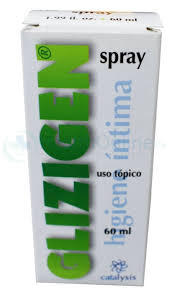
Catalysis GLICIGEN TRUSTED Spray 30ml
Anbieter: Kaufland.de Preis: 18,85 €Experience a taste of luxury and make your body a gift.
-
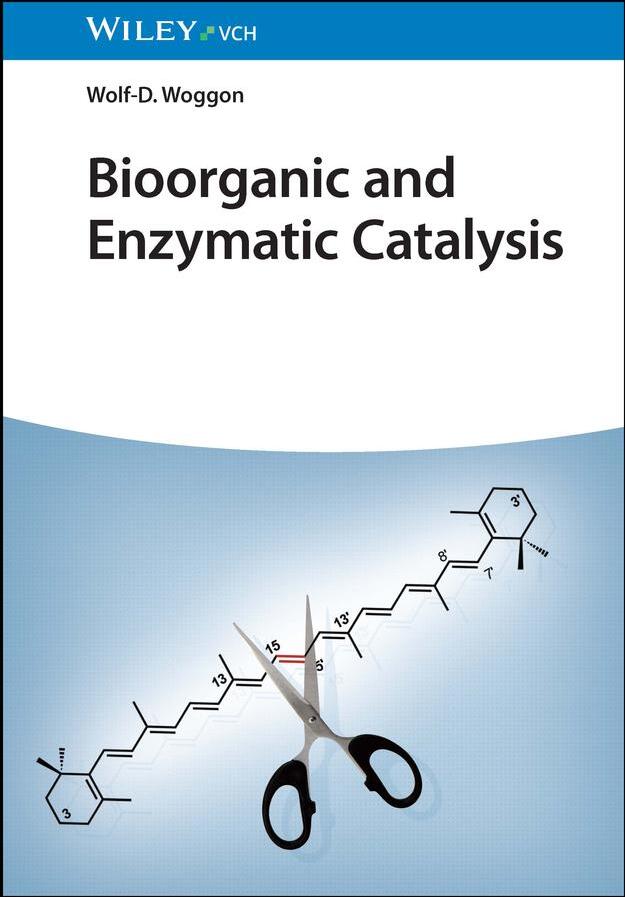
Wiley VCH Bioorganic and Enzymatic Catalysis
Anbieter: Kaufland.de Preis: 113,25 € (+1,90 €)Das Buch behandelt die wichtigsten enzymatischen Reaktionen und verwandte katalytische bioorganische Reaktionen mit einem neuen Ansatz: Jeder enzymatische Reaktionstyp wird mit organokatalytischen, metallorganischen und anderen alternativen Reaktionen verglichen, so dass der Leser die katalytischen Reaktionen auf eine viel umfassendere Weise verstehen kann. Beschrieben werden die enzymatische C-C-Bindungsbildung mit Aldolasen, die C-C-Bindungsbildung vom Claisen-Typ mit Fettsäuresynthasen und Polyketidsynthasen, biomimetische Zyklisierungen mit Carbeniumionen, enzymatische Oxidation und C-H-Aktivierung sowie Dioxygenasen und Oxidoreduktasen. Mit seinem einzigartigen Ansatz ist das Buch eine wertvolle Informationsquelle für Fachleute und Forscher an Hochschulen und in der Industrie sowie für Diplomanden und Doktoranden, die in den Bereichen organische Chemie, Biochemie und Biowissenschaften arbeiten.
-

Electrolux EOD5F71Z SteamBake 600 Catalysis Steam oven Black
Anbieter: Kaufland.de Preis: 451,34 €Electrolux EOD5F71Z SteamBake 600 Catalysis Steam oven Black AllgemeinesTypSonstiges ElektrogroßgerätFarbeSchwarz
-

Electrolux SenseCook 700 Catalysis Oven EOE5C71X
Anbieter: Kaufland.de Preis: 690,00 €Electrolux SenseCook 700 Catalysis Oven EOE5C71X AllgemeinesTypSonstiges Elektrogroßgerät
-

Electrolux EOD5F71Z SteamBake 600 Catalysis Steam oven Black
Anbieter: Kaufland.de Preis: 451,34 €Electrolux EOD5F71Z SteamBake 600 Catalysis Steam oven Black AllgemeinesTypSonstiges ElektrogroßgerätFarbeSchwarz
-
Sonstige Verlage Applied Catalysis in Chemical Industry
Anbieter: Kaufland.de Preis: 85,00 € -

Springer US Sintering and Catalysis
Anbieter: Link.springer.com Preis: 53,49 €The proceedings of the 4th International Conference on Sin tering and Related Phenomena, contained in this volume, have been broadened in scope to include the phenomena of sintering and coa lescence of catalytic materials dispersed upon refractory oxides. For it has long been recognized within the circles of chemists and chemical engineers working in the field of catalysis that one of the chief causes of the decline in heterogeneous catalytic activity and/or selectivity is, indeed sintering, or perhaps using a better term, coalescence of the supported catalytic metal and compounds thereof. Essentially catalytic deactivation by sintering is now weIl recognized as Ostwald ripening; which of course is a phenome non familiar to scientists grappling with the problem of sintering of powder compacts. The 4th Conference at Notre Dame marks the first occasion at which scientists and engineers of each discipline were assembled in the same room to exchange views on these phenome na of mutual concern. In the wake of the Conference at Notre Dame, all parties acknowledged the synergistic benefit which issued from this exchange, both at the formal and informal level. All were persuaded that signal benefits will be realized by a continuation of this collab oration in the form of future sintering conferences in which both powder metallurgists and catalytic scientists and engineers would participate.
-

Springer US The Enzyme Catalysis Process
Anbieter: Link.springer.com Preis: 106,99 €This volume represents the proceedings of a NATO Advanced Studies Instituteheld near Barga (Italy), July 11-23, 1988, involving over 90 participants from more than twelve countries of Europe, North America and elsewhere. It was not our intention at this meeting to present a complete up-to-the-minute review of current research in enzyme catalysis but t·ather, in accord wi th the intended spiri t of NATO ASis, to gi ve an opportunity for advanced students and researchers in a wide variety of disciplines to meet tagether and study the problern from different points of view. Hence the lectures cover topics rauging from the purely theoretical aspects of chemical reaction kinetics in condensed matter through practical experimental approaches to enzyme structure, dynamics and mechanism, including the new experimental opportunities arising from genetic engineering techniques. Our approachwas unashamedly physical, both because the more biochemical aspects of enzymology are amply covered elsewhere and because progress in our understanding and application of the molecular basis of enzymic processes must ultimately come from advances in physical knowledge. We tried to cover as wide a spectrum as possible, and succeeded in gathering an expert and enthusiastic team of speakers, but there . are some inevitable omissions. In particular, and with hindsight, our discussions might have been enriched by more detailed coverage of general aspects of chemical catalysis - but readers requiring this background should find adequate references herein.
-

Springer New York Model Systems in Catalysis
Anbieter: Link.springer.com Preis: 160,49 €This book is an excellent compilation of cutting-edge research in heterogeneous catalysis and related disciplines – surface science, organometallic catalysis, and enzymatic catalysis. In 23 chapters by noted experts, the volume demonstrates varied approaches using model systems and their successes in understanding aspects of heterogeneous catalysis, both metal- and metal oxide-based catalysis in extended single crystal and nanostructured catalytic materials. To truly appreciate the astounding advances of modern heterogeneous catalysis, let us first consider the subject from a historical perspective. Heterogeneous catalysis had its beginnings in England and France with the work of scientists such as Humphrey Davy (1778–1829), Michael Faraday (1791–1867), and Paul Sabatier (1854–1941). Sabatier postulated that surface compounds, si- lar to those familiar in bulk to chemists, were the intermediate species leading to catalytic products. Sabatier proposed, for example, that NiH moieties on a Ni sur- 2 face were able to hydrogenate ethylene, whereas NiH was not. In the USA, Irving Langmuir concluded just the opposite, namely, that chemisorbed surface species are chemically bound to surfaces and are unlike known molecules. These chemisorbed species were the active participants in catalysis. The equilibrium between gas-phase molecules and adsorbed chemisorbed species (yielding an adsorption isotherm) produced a monolayer by simple site-filling kinetics.
-

Springer New York Model Systems in Catalysis
Anbieter: Link.springer.com Preis: 160,49 €This book is an excellent compilation of cutting-edge research in heterogeneous catalysis and related disciplines – surface science, organometallic catalysis, and enzymatic catalysis. In 23 chapters by noted experts, the volume demonstrates varied approaches using model systems and their successes in understanding aspects of heterogeneous catalysis, both metal- and metal oxide-based catalysis in extended single crystal and nanostructured catalytic materials. To truly appreciate the astounding advances of modern heterogeneous catalysis, let us first consider the subject from a historical perspective. Heterogeneous catalysis had its beginnings in England and France with the work of scientists such as Humphrey Davy (1778–1829), Michael Faraday (1791–1867), and Paul Sabatier (1854–1941). Sabatier postulated that surface compounds, si- lar to those familiar in bulk to chemists, were the intermediate species leading to catalytic products. Sabatier proposed, for example, that NiH moieties on a Ni sur- 2 face were able to hydrogenate ethylene, whereas NiH was not. In the USA, Irving Langmuir concluded just the opposite, namely, that chemisorbed surface species are chemically bound to surfaces and are unlike known molecules. These chemisorbed species were the active participants in catalysis. The equilibrium between gas-phase molecules and adsorbed chemisorbed species (yielding an adsorption isotherm) produced a monolayer by simple site-filling kinetics.
-

Humana Press Nanoscale Biocatalysis
Anbieter: Link.springer.com Preis: 85,59 €Nanoscale science and engineering, which deal with size-dependent properties and phenomenon at nanometer scale, are unveiling new mechanisms that scientists must rely on heavily at the present time to achieve efficient and sustainable chemical processing technologies. In Nanoscale Biocatalysis: Methods and Protocols, expert researchers in the field contribute detailed methodologies and procedures that have been developed from recent research in this burgeoning area of nanoscale technology-enabled biocatalysis. The volume opens with concepts in preparing unique and dynamic protein structures for biocatalysis, then moves on to cover methods for preparation of enzyme assembles or complexes that maintain molecular-like Brownian mobility, the development of protein-nanostructure complexes using carbon nanotubes (CNTs) and nanoparticles, as well as methodologies that have great potential for scale-up preparation of nano-structured biocatalysts. Written in the highly successful Methods in Molecular Biology™ series format, chapters include brief introductions to their respective topics, lists of the necessary materials and reagents, step-by-step, readily reproducible laboratory protocols, and vital tips on troubleshooting and avoiding known pitfalls. Authoritative and cutting-edge, Nanoscale Biocatalysis: Methods and Protocols is an ideal guide to the new wave of development in nearly all the major areas of science and engineering brought about by this fascinating and greatly promising area of study.
-

Humana Press Nanoscale Biocatalysis
Anbieter: Link.springer.com Preis: 117,69 €Nanoscale science and engineering, which deal with size-dependent properties and phenomenon at nanometer scale, are unveiling new mechanisms that scientists must rely on heavily at the present time to achieve efficient and sustainable chemical processing technologies. In Nanoscale Biocatalysis: Methods and Protocols, expert researchers in the field contribute detailed methodologies and procedures that have been developed from recent research in this burgeoning area of nanoscale technology-enabled biocatalysis. The volume opens with concepts in preparing unique and dynamic protein structures for biocatalysis, then moves on to cover methods for preparation of enzyme assembles or complexes that maintain molecular-like Brownian mobility, the development of protein-nanostructure complexes using carbon nanotubes (CNTs) and nanoparticles, as well as methodologies that have great potential for scale-up preparation of nano-structured biocatalysts. Written in the highly successful Methods in Molecular Biology™ series format, chapters include brief introductions to their respective topics, lists of the necessary materials and reagents, step-by-step, readily reproducible laboratory protocols, and vital tips on troubleshooting and avoiding known pitfalls. Authoritative and cutting-edge, Nanoscale Biocatalysis: Methods and Protocols is an ideal guide to the new wave of development in nearly all the major areas of science and engineering brought about by this fascinating and greatly promising area of study.
-

Humana Press Nanoscale Biocatalysis
Anbieter: Link.springer.com Preis: 106,99 €Nanoscale science and engineering, which deal with size-dependent properties and phenomenon at nanometer scale, are unveiling new mechanisms that scientists must rely on heavily at the present time to achieve efficient and sustainable chemical processing technologies. In Nanoscale Biocatalysis: Methods and Protocols, expert researchers in the field contribute detailed methodologies and procedures that have been developed from recent research in this burgeoning area of nanoscale technology-enabled biocatalysis. The volume opens with concepts in preparing unique and dynamic protein structures for biocatalysis, then moves on to cover methods for preparation of enzyme assembles or complexes that maintain molecular-like Brownian mobility, the development of protein-nanostructure complexes using carbon nanotubes (CNTs) and nanoparticles, as well as methodologies that have great potential for scale-up preparation of nano-structured biocatalysts. Written in the highly successful Methods in Molecular Biology™ series format, chapters include brief introductions to their respective topics, lists of the necessary materials and reagents, step-by-step, readily reproducible laboratory protocols, and vital tips on troubleshooting and avoiding known pitfalls. Authoritative and cutting-edge, Nanoscale Biocatalysis: Methods and Protocols is an ideal guide to the new wave of development in nearly all the major areas of science and engineering brought about by this fascinating and greatly promising area of study.
-
Sonstige Verlage Recent Advances in Electrochemical Promotion of Catalysis
Anbieter: Kaufland.de Preis: 156,15 € -

Springer Berlin Heidelberg Catalysis
Anbieter: Link.springer.com Preis: 106,99 €For catalytic practitioners who are concerned with laboratory studies of reaction mechanisins, as often as not catalyst deactivation is· treated as a nuisance to be ignored or factored out of the experimental results. How ever, the engineer concerned with the design and opera tion of real catalysts and processes cannot afford this luxury: for him deactivation and the need for regenera tion are inevitable facts of life which need to be treated as quantified design parameters. The first chapter in this volume by Prof. J. B. Butt deals with catalyst deactivation and regeneration as processes in their own right, and shows how they are to be approached from kinetic and design points of view. Catalytic olefin polymerization spans a very wide field in catalytic process chemistry and technology. Processes of this sort range from the generation of high volume products such as polyethylene and polypropylene, through more specialized commercial products, to con versions that still remain laboratory curiosities. The reaction chemistry is, in detail, often very complex. However, because of the insight provided by organo metallic reaction chemistry, many of the polymerization mechanisms are reasonably well understood, and the way in which product stereospecificity may be obtained is also understood in considerable detail. This highly complex subject is reviewed in detail in the second chapter of this volume by Prof. I. Pasquon and Dr. G. Giannini.
-

Springer US Chemical Kinetics and Catalysis
Anbieter: Link.springer.com Preis: 160,49 €to the Fundamental and Applied Catalysis Series Catalysis is important academically and industrially. It plays an essential role in the manufacture of a wide range of products, from gasoline and plastics to fertilizers and herbicides, which would otherwise be unobtainable or prohibitively expensive. There are few chemical-or oil-based material items in modem society that do not depend in some way on a catalytic stage in their manufacture. Apart from manu facturing processes, catalysis is finding other important and ever-increasing uses; for example, successful applications of catalysis in the control of pollution and its use in environmental control are certain to increase in the future. The commercial importance of catalysis and the diverse intellectual challenges of catalytic phenomena have stimulated study by a broad spectrum of scientists, including chemists, physicists, chemical engineers, and material scientists. Increas ing research activity over the years has brought deeper levels of understanding, and these have been associated with a continually growing amount of published material. As recently as sixty years ago, Rideal and Taylor could still treat the subject comprehensively in a single volume, but by the 1950s Emmett required six volumes, and no conventional multivolume text could now cover the whole of catalysis in any depth. In view of this situation, we felt there was a need for a collection of monographs, each one of which would deal at an advanced level with a selected topic, so as to build a catalysis reference library.
-

Springer Berlin Heidelberg Catalysis
Anbieter: Link.springer.com Preis: 106,99 €Catalysis has made major contributions to many areas of chemical industry. Before embarking upon detailed considerations of catalytic science and technology, it is very helpful to look first at the nature of industrial catalysis, and how it has evolved and grown to meet demands imposed by changing industrial needs. Dr. H. Reinemann is uniquely qualified to place industrial catalysis in a historical perspective: in his distinguished industrial career he has been closely involved with many of the major innovations in industrial catalysis. Before a catalytic process is commercialized, the supporting research and development work is carried out in chemical reactors. It is obviously imperative that the behaviour of such reactor systems should be tho roughly understood by those who use them, and by those who may have to interpret their results, yet all too often this basic need is not met. Professor J. C. R. Turner provides a Straightforward yet thorough account of catalytic reactor theory which should make it impossi ble for any catalytic practitioner to plead ignorance. The catalytic hydrogenation of dinitrogen to ammonia is one of the world's great industrial processes and the catalytic activation of molecular dinitrogen is a key step in that process. The chapter by Professors A. Ozaki and K. Aika deals with the chemistry of dinitrogen activation at the catalyst surface, and shows how this relates to the synthesis of ammonia. The chapter also deals with the activation of dinitrogen by molecular complexes in homogeneaus systems.
-

Springer US Catalysis Progress in Research
Anbieter: Link.springer.com Preis: 53,49 €This conference on Catalysis was held under the auspices ofthe NATO Science Committee as part of its continuing effort to promote the useful progress of science through international cooperation. The Science Committee Conferences are deliberately designed and struc tured to focus expert attention on what is not known, rather than what is known. The participants are carefully selected to bring together a variety of complementary viewpoints. Through intensive group discussion, they seek to reach agreement on conclusions and recommendations for future research which will be of value to the scientific community. We believe that the endeavour has been particularly successful in the pre sent case. Some twenty-five papers, either in the form of reprints or specially written reviews were contributed by the participants for advance circulation, to outline the state-of-the art in the three areas ofheterogeneous, homogeneous and metalloenzyme catalysis and to focus attention on key problems. The availability of this background material precluded the need for lengthy intro ductory presentations and permitted rapid initiation of interdisciplinary discussions. All participants gave generously and enthusiastically of their expertise and effort during the week of the meeting, of ten long past normal bedtime hours, and we extend to them our deep gratitude.
-

Springer Berlin Heidelberg Catalysis
Anbieter: Link.springer.com Preis: 53,49 €There is currently no description available
-

Springer US Chemical Kinetics and Catalysis
Anbieter: Link.springer.com Preis: 171,19 €to the Fundamental and Applied Catalysis Series Catalysis is important academically and industrially. It plays an essential role in the manufacture of a wide range of products, from gasoline and plastics to fertilizers and herbicides, which would otherwise be unobtainable or prohibitively expensive. There are few chemical-or oil-based material items in modem society that do not depend in some way on a catalytic stage in their manufacture. Apart from manu facturing processes, catalysis is finding other important and ever-increasing uses; for example, successful applications of catalysis in the control of pollution and its use in environmental control are certain to increase in the future. The commercial importance of catalysis and the diverse intellectual challenges of catalytic phenomena have stimulated study by a broad spectrum of scientists, including chemists, physicists, chemical engineers, and material scientists. Increas ing research activity over the years has brought deeper levels of understanding, and these have been associated with a continually growing amount of published material. As recently as sixty years ago, Rideal and Taylor could still treat the subject comprehensively in a single volume, but by the 1950s Emmett required six volumes, and no conventional multivolume text could now cover the whole of catalysis in any depth. In view of this situation, we felt there was a need for a collection of monographs, each one of which would deal at an advanced level with a selected topic, so as to build a catalysis reference library.
40 Ergebnisse in 0.318 Sekunden
Ähnliche Suchbegriffe
© Copyright 2026 shopping.eu