Es wurden 40 Produkte zu dem Suchbegriff insecticides in 4 Shops gefunden:
-
Springer US Toxicology of Insecticides
Anbieter: Link.springer.com Preis: 106,99 €Why are books written? Since I have read many works by my colleagues with admiration, this question has always intrigued me. Further, writing a book takes a good deal of time and effort, and I had imagined that I would never undertake such a demanding task. A few unexpected events and circumstances have changed my mind. The first was the pleasant experience of editing Environmental Toxicology of Pesticides with Drs. Mallory Boush and Tomomasa Misato. This fine symposium volume occasioned many interesting responses, including a suggestion to prepare a more complete treatise on the grounds that such "proceedings" volumes, by their very nature, do not satisfactorily offer a complete and coherent description of the field, but cater chiefly to specialists. I myself prefer single-authored books for basic understanding of a scientific field. The second circumstance leading to the present volume was the avail ability of teaching notes from my course on the toxicology of insecticides. As the need to cultivate environmental awareness has increased, there has been a parallel increase in the enrolments of such courses both here and in other major institutions. Yet no comprehensive and up-to-date text has been available. The third factor which facilitated the effort was an especially pleasant sabbatical in Hawaii, where the availability of the excellent Hamilton Library at the University of Hawaii considerably eased my task.
-
Springer US Toxicology of Insecticides
Anbieter: Link.springer.com Preis: 160,49 €The most rewarding aspect of writing a book is receiving encouraging comments from one's colleagues, since one always wonders whether fair coverage was made of the work of others or whether some omissions were made. I feel very fortunate that many colleagues took the time to read the first edition of this book and chose to use it as a textbook in their teaching. During the past few years they have given me valuable suggestions by pointing out areas that needed to be added to improve the book. Toxicology is one of the fastest moving scientific fields. In the areas of insecticide toxicology many new advances have been made since this treatise first appeared. Therefore, it would not be easy to write even a review paper that would not be outdated by the time it was published. In revising this volume I have made a conscious effort to adhere to the basic principles which have been developed over the years. While I have retained the basic framework of the original book, advances that fundamentally change certain concepts or add a new horizon have been chosen for updating those fields where applicable. The main emphasis has been placed on the addition of new sections and new compounds developed since 1975. Since the first edition appeared, several books covering technical details in each group have been published. They are excellent encyclopedic resources in their chosen areas, and are listed in each section as recommended reading material.
-
Springer US Insecticide Action
Anbieter: Link.springer.com Preis: 106,99 €Intoxication of humans and animals has become increasingly important in recent years as has contamination of the environment by a variety of chemicals. In order to develop effective means by which such intoxication and contamination can be properly handled, it is imperative to know how these environmental agents act in humans and animals. Despite studies conducted by various investigators, the mechanisms of action of these environmental agents have not been fully elucidated. Insecticides are by no means an exception in terms of the seriousness of the problem and of the urgency of the need for such information. In order to complete a picture of the effects of any particular insecticide, it is of utmost importance that its actions at various levels ranging from those of molecules to whole animals be analyzed and synthesized. To understand the toxicological action on animals or humans, it is not sufficient to know the action at each level only. The actions at various levels must be integrated to construct a picture of the toxic effect on the intact organism. However, in spite of the large body of information that has been accumulated during the past few decades, little or no attempt has been made to integrate experimental data obtained at the molecular, cellular, organ, and animal levels together in order to define the whole picture of insecticidal action.
-
Springer US Insects, Experts, and the Insecticide Crisis
Anbieter: Link.springer.com Preis: 53,49 €Science and technology are cultural phenomena. Expert knowledge is generated amid the conflicts of a society and in turn supplies fuel to fire yet further change and new clashes. This essay on economic entomology is a case study on how cultural events and forces affected the creation of scientific and technical knowledge. The time period emphasized is 1945 to 1980. My initial premises for selecting relevant data for the story were ultimately not of much use. Virtually all debates about insect control since 1945 have been centered around the environmental and health hazards associated with insecticides. My first but inadequate conclusion was that the center of interest lay between those who defended the chemicals and those who advocated the use of nonchemical control methods. With this formulation of the problem, I was drawn to an analysis of how the chemical manufacturers had managed to dominate and even corrupt the work of entomological scientists, farmers, members of Congress, and regulators in the USDA and EPA. My own contribu tions to a policy study at the National Academy of Sciences were based 1 on this premise. More recently, Robert van den Bosch developed the 2 "corruption theme" in considerable detail.
-
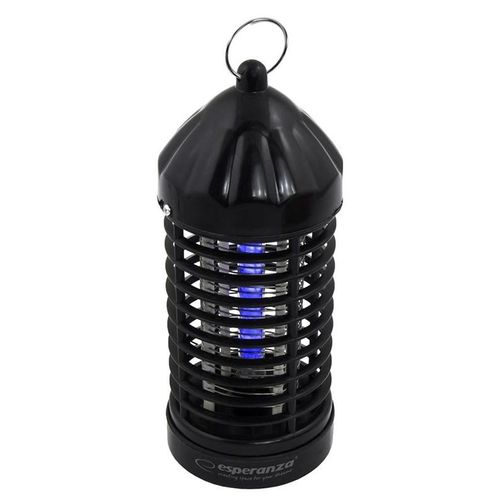
Esperanza INSECTICIDAL LAMP TERMINATOR II
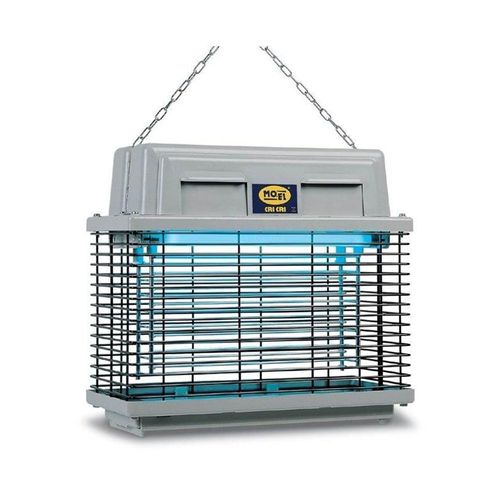
Anbieter: Proshop.de Preis: 5,89 € (+4,99 €)The Esperanza TERMINATOR insecticidal lamp very effectively attracts insects such as flies, moths, mosquitoes and other flying insects, and then eliminates them efficiently. The device does not use any chemicals or aerosols. Does not emit any odors. The product is not harmful to humans or pets. It is an ideal solution for home, garden or office.
-
Springer Berlin Heidelberg Approaches to New Leads for Insecticides
Anbieter: Link.springer.com Preis: 106,99 €There is currently no description available
-
Springer US Neurotoxicology of Insecticides and Pheromones
Anbieter: Link.springer.com Preis: 106,99 €Substantial progress has been made during the past three decades in the development of a variety of chemical means to control insect pests. A large number of highly effective insecticides have been developed, and many of them have contributed to a great extent to increasing agricultural productivity and eradicating diseases transmitted by vectors. However, contamination of our environment caused by various pesticides has become a serious problem, and various attempts have been made to develop newer methods of con trolling insect pests. One of the approaches is to develop newer insecticides which cause less contamination of the environment without losing their insecticidal potencies. Another approach, among other things, is to utilize pheromones to control certain species of insects. No matter what approach one may choose, it is imperative to understand the mechanism of action of pesticides for efficient development and utilization of these chemicals. One important feature common to most insecticides and pheromones is their inter action with the nervous system which is the main target site. Thus the mechanisms of action of these chemicals on the nervous system represent one of the most critical aspects in pesticide toxicology. In comparison to the chemical and biochemical studies dealing with the metabolism of various pesticides, the study of neurotoxicology has lagged behind to a considerable extent for various reasons. Technical complications involved in neuroto- co logical experiments appear to be one of the contributing factors.
-
Springer Nature Switzerland Nano-Insecticide
Anbieter: Link.springer.com Preis: 171,19 €In recent years, nanotechnology has emerged as a promising tool for combating insect pests in agriculture, public health, and urban environments. Nanomaterials offer unique properties which can be leveraged to develop targeted and environmentally sustainable pest control solutions. However, despite growing interest in this area, there remains a need for a comprehensive resource that synthesizes the latest research findings and practical applications of nanotechnology for insect pest control. Nano-Insecticide addresses this gap by providing a thorough overview of the diverse applications of nanotechnology in insect pest management. The book covers a wide range of topics, including nanoparticles for insecticide delivery and release, nanostructured materials for pest monitoring and detection, nanobiotechnology approaches for pest-specific targeting, environmental implications, safety considerations and more. Case studies and practical applications from various agricultural and urban settings are also featured. Each chapter is authored by leading experts in their respective fields, ensuring that the book reflects the latest advancements and perspectives in nanotechnology for insect pest control. This book serves as a valuable resource for researchers, practitioners, policymakers, and students interested in the intersection of nanotechnology and pest management. By providing a comprehensive overview of the current state-of-the-art and future directions in the field, Nano-Insecticide aims to stimulate further research and innovation in this critical area. It has the potential to significantly advance our understanding and application of novel pest management strategies.
-
Springer Nature Switzerland Nano-Insecticide
Anbieter: Link.springer.com Preis: 213,99 €In recent years, nanotechnology has emerged as a promising tool for combating insect pests in agriculture, public health, and urban environments. Nanomaterials offer unique properties which can be leveraged to develop targeted and environmentally sustainable pest control solutions. However, despite growing interest in this area, there remains a need for a comprehensive resource that synthesizes the latest research findings and practical applications of nanotechnology for insect pest control. Nano-Insecticide addresses this gap by providing a thorough overview of the diverse applications of nanotechnology in insect pest management. The book covers a wide range of topics, including nanoparticles for insecticide delivery and release, nanostructured materials for pest monitoring and detection, nanobiotechnology approaches for pest-specific targeting, environmental implications, safety considerations and more. Case studies and practical applications from various agricultural and urban settings are also featured. Each chapter is authored by leading experts in their respective fields, ensuring that the book reflects the latest advancements and perspectives in nanotechnology for insect pest control. This book serves as a valuable resource for researchers, practitioners, policymakers, and students interested in the intersection of nanotechnology and pest management. By providing a comprehensive overview of the current state-of-the-art and future directions in the field, Nano-Insecticide aims to stimulate further research and innovation in this critical area. It has the potential to significantly advance our understanding and application of novel pest management strategies.
-
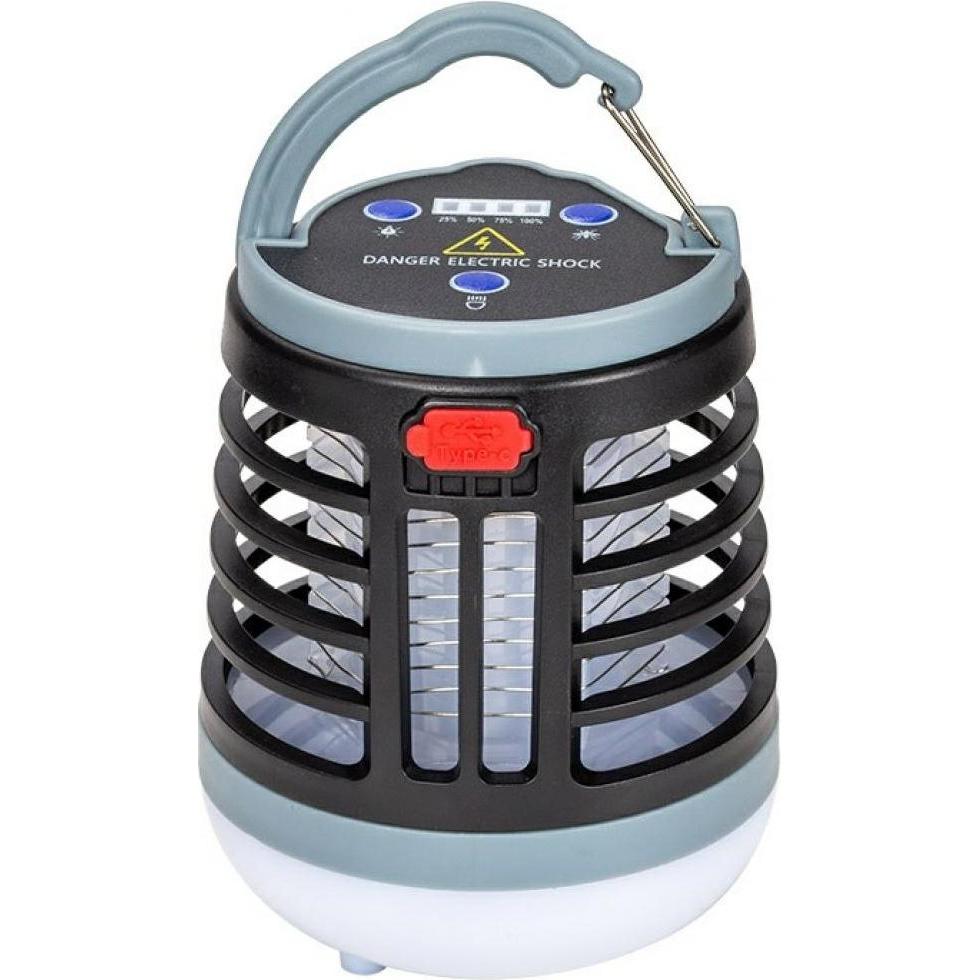
No Name Insecticide lamp 1200mAh black (Beli03814)
Anbieter: Galaxus.de Preis: 25,90 €No Name Insecticide lamp 1200mAh black (Beli03814)
-
Springer International Publishing Pyrethroid Insecticides
Anbieter: Link.springer.com Preis: 406,59 €This book reviews the latest developments concerning the analysis, fate, behaviour and toxicity of pyrethroid insecticides. Over the last few decades, pyrethroid insecticides have increasingly replaced organochlorine pesticides due to their relatively lower mammalian toxicity, selective insecticide activity and lower environmental persistence. They represent 25% of global sales of insecticides, and are considered to be “safe” since they are converted to non-toxic metabolites by oxidative metabolism in fish and by hydrolysis in mammals. However, recent studies have demonstrated their environmental ubiquity, their bioaccumulation and their toxicity in various aquatic and terrestrial organisms, and even in humans. Featuring contributions by leading experts, the book discusses the physico-chemical properties and uses of pyrethroid insecticides; the latest chemical analytical methods; their occurrence in the environment, biota and food; and their isomeric and enantiomeric behaviour. It particularly highlights the toxicological effects and human exposure to pyrethroid insecticides, and also offers insights into the effects of the salmon industry on the marine environment with a case study of sea lice treatment using pyrethroids. This comprehensive book is a valuable source of information for environmental scientists, policymakers and producers interested in issues related to pyrethroid insecticides.
-
Springer International Publishing Pyrethroid Insecticides
Anbieter: Link.springer.com Preis: 319,93 €This book reviews the latest developments concerning the analysis, fate, behaviour and toxicity of pyrethroid insecticides. Over the last few decades, pyrethroid insecticides have increasingly replaced organochlorine pesticides due to their relatively lower mammalian toxicity, selective insecticide activity and lower environmental persistence. They represent 25% of global sales of insecticides, and are considered to be “safe” since they are converted to non-toxic metabolites by oxidative metabolism in fish and by hydrolysis in mammals. However, recent studies have demonstrated their environmental ubiquity, their bioaccumulation and their toxicity in various aquatic and terrestrial organisms, and even in humans. Featuring contributions by leading experts, the book discusses the physico-chemical properties and uses of pyrethroid insecticides; the latest chemical analytical methods; their occurrence in the environment, biota and food; and their isomeric and enantiomeric behaviour. It particularly highlights the toxicological effects and human exposure to pyrethroid insecticides, and also offers insights into the effects of the salmon industry on the marine environment with a case study of sea lice treatment using pyrethroids. This comprehensive book is a valuable source of information for environmental scientists, policymakers and producers interested in issues related to pyrethroid insecticides.
-
Springer International Publishing Pyrethroid Insecticides
Anbieter: Link.springer.com Preis: 406,59 €This book reviews the latest developments concerning the analysis, fate, behaviour and toxicity of pyrethroid insecticides. Over the last few decades, pyrethroid insecticides have increasingly replaced organochlorine pesticides due to their relatively lower mammalian toxicity, selective insecticide activity and lower environmental persistence. They represent 25% of global sales of insecticides, and are considered to be “safe” since they are converted to non-toxic metabolites by oxidative metabolism in fish and by hydrolysis in mammals. However, recent studies have demonstrated their environmental ubiquity, their bioaccumulation and their toxicity in various aquatic and terrestrial organisms, and even in humans. Featuring contributions by leading experts, the book discusses the physico-chemical properties and uses of pyrethroid insecticides; the latest chemical analytical methods; their occurrence in the environment, biota and food; and their isomeric and enantiomeric behaviour. It particularly highlights the toxicological effects and human exposure to pyrethroid insecticides, and also offers insights into the effects of the salmon industry on the marine environment with a case study of sea lice treatment using pyrethroids. This comprehensive book is a valuable source of information for environmental scientists, policymakers and producers interested in issues related to pyrethroid insecticides.
-
Springer US Insecticide Biochemistry and Physiology
Anbieter: Link.springer.com Preis: 235,39 €Only four short decades ago, the control of insect pests by means of chemicals was in its early infancy. The pioneers in the area consisted largely of a group of dedicated applied entomologists working to the best of their abilities with a very limited arsenal of chemicals that included inorganics (arsenicals, fluorides, etc.), some botanicals (nicotine), and a few synthetic organics (dinitro-o-cresol, organothiocyanates). Much of the early research was devoted to solving practical problems associated with the formulation and application of the few existing materials, and although the discovery of new types of insecticidal chemicals was undoubtedly a pipe dream in the minds of some, little or no basic research effort was expended in this direction. The discovery of the insecticidal properties of DDT by Paul Miiller in 1939 has to be viewed as the event which marked the birth of modern insecticide chemistry and which has served as the cornerstone for its subse quent developement. DDT clearly demonstrated for the first time the dramatic potential of synthetic organic chemicals for insect control and provided the initial stimulus which has caused insecticide chemistry to become a field not only of immense agricultural and public health importance but also one that has had remarkable and unforseeable repercussions in broad areas of the physical, biological, and social sciences. Indeed, there can be few other synthetic chemicals which will be judged in history to have had such a broad and telling impact on mankind as has DDT.
-
Springer US Insecticide Biochemistry and Physiology
Anbieter: Link.springer.com Preis: 213,99 €Only four short decades ago, the control of insect pests by means of chemicals was in its early infancy. The pioneers in the area consisted largely of a group of dedicated applied entomologists working to the best of their abilities with a very limited arsenal of chemicals that included inorganics (arsenicals, fluorides, etc.), some botanicals (nicotine), and a few synthetic organics (dinitro-o-cresol, organothiocyanates). Much of the early research was devoted to solving practical problems associated with the formulation and application of the few existing materials, and although the discovery of new types of insecticidal chemicals was undoubtedly a pipe dream in the minds of some, little or no basic research effort was expended in this direction. The discovery of the insecticidal properties of DDT by Paul Miiller in 1939 has to be viewed as the event which marked the birth of modern insecticide chemistry and which has served as the cornerstone for its subse quent developement. DDT clearly demonstrated for the first time the dramatic potential of synthetic organic chemicals for insect control and provided the initial stimulus which has caused insecticide chemistry to become a field not only of immense agricultural and public health importance but also one that has had remarkable and unforseeable repercussions in broad areas of the physical, biological, and social sciences. Indeed, there can be few other synthetic chemicals which will be judged in history to have had such a broad and telling impact on mankind as has DDT.
-
Springer Berlin Heidelberg Insecticides in Agriculture and Environment
Anbieter: Link.springer.com Preis: 128,39 €Professor Albert S. Perry passed away suddenly on February 18, 1992, leaving behind his grieving family, friends and colleagues. It was his aspiration to produce a comprehensive work on insecticides to summarize his lifelong dedication to the field of entomology and public health. On the day before his operation, he expressed his desire with the following words: . "1 am coming out of this surgery and will recuperate from it as soon as possible for the sake of my boy (then aged three) and the book". He also told me that he would like to add a chapter on IPM (Integrated Pest Management) and suggested that we write it together. The sad reality is that none of this took place the way he had planned and these became his last words. On my own, I found it difficult to proceed with the writing of the IPM chapter, since several chapters are required to cover· this subject and, in fact, several books. are already devoted to IPM. There was even an IPM article written in a journal (Awake 1983) for a general audience to which he commented that he would like to use it someday because it was well written for laymen, thus providing the readers a wide selection of journals and books to choose from.
-
Pulvérisateur pour terre de diatomée, poudre insecticide - Lntyq
Anbieter: Manomano.de Preis: 19,23 €Allgemeine Beschreibung Der Lntyq Pulvérisateur für Erde von Diatomee ist ein effektives Werkzeug zur Anwendung von Insektiziden und Repellentien. Mit seiner robusten Konstruktion und den speziellen Eigenschaften ist er ideal für die Bekämpfung von Schädlingen in schwer zugänglichen Bereichen. Technische daten Baguette anti-corrosion aus Silikon und Kupfer Robuste Gummipoire Translucente Poire für einfaches Befüllen und Sichtbarkeit der Puderfüllung Verstellbare, längere Lances für schwer erreichbare Stellen Kompatibilität und Zubehör Geeignet für die Verwendung mit Diatomeepulver und anderen Insektiziden Installation Einfaches Befüllen der Poire durch die transparente Konstruktion Anwendung Ideal für Ecken, Dachüberstände und Ritzen zwischen großen Geräten und Schränken Effektive Anwendung von Insektiziden in engen Räumen
-
Springer Berlin Heidelberg Insecticide Microbiology
Anbieter: Link.springer.com Preis: 106,99 €Of all the food produced in the world one third is lost to insect pests, weeds and diseases, and the total world population is estimated as growing from 4000 million in 1975 to about 6000 million by the year 2000. To satisfy these needs, the world's farmers must meet the extra requirement every year. The easiest way in which farmers can increase the amount of food they produce is to prevent the loss due to pests. The biological control measures which were once thought to be the safest methods of pest control have, as we now know, not proved successful on a commercial scale. In such a dismal situation the only solution is to use pesticides to save the losses from pests and to increase the crop yield. Apart from agriculture, pesticides have also contributed much to human com fort by controlling the vectors of typhoid, malaria, sleeping sickness, filariasis, dengue hemorrhage fever, plague etc. On the other hand, the indiscriminate use of insecticides and their harmful effects on nontarget organisms has attracted much attention from people in all walks of life, for example, scientists, administrators, the press and the public. The harmful effects of insecticides on higher organisms such as birds, fish and mammals are easy to observe and have received much attention. However, the interactions of insecticides with microorganisms such as bacteria, fungi, algae and protozoa have gone unnoticed until recently.
-
Springer Berlin Heidelberg Insecticides Design Using Advanced Technologies
Anbieter: Link.springer.com Preis: 160,49 €In the past, insecticide development has been guided mostly by chemo-rational and bio-rational design based on understanding of the physiology and ecology of insects and crops. A limitation in each new class of compounds is the evolution of resistance in populations of key pests, which ultimately leads to control failures. This phenomenon and the desire to produce more selective and biorational compounds serve as the driving force to develop advanced technologies for insecticide design. Among the highlights of this book are the use of nanotechnology to increase potency of available insecticides, the use of genetic engineering techniques for controlling insect pests, the development of novel insecticides that bind to unique biochemical receptors, the exploration of natural products as a source for environmentally acceptable insecticides, and the use of insect genomics and cell lines for determining biological and biochemical modes of action of new insecticides.
-
Springer Netherlands Environmental Impacts of Microbial Insecticides
Anbieter: Link.springer.com Preis: 160,49 €Biological pesticides are increasingly finding therr place in IPM and increasing numbers of products are making therr way to the marketplace. Particularly in China, Latin America and Australia, implementation is proceeding on a large scale. However, in the USA and Europe, registration procedures for insect pathogens to be used for insect control have been established that requrre low levels of risk, resulting in costs of retarding the implementation of microbial agents. This book provides a review of the state of the art of studies on the envrronmental impact of microbial insecticides. It originates from a Society for Invertebrate Pathology Microbial Control Division Symposium .. Assessment of envrronmental safety of biological insecticides", organised in collaboration with the EU-ERBIC research project (FAIR5-CT97-3489). This symposium was initiated by Heikki Hokkanen and Chris Lomer, and was held at the SIP Annual Meeting in 2001 in The Netherlands. The emphasis in this book is on large scale use of microbial agents for insect control, demonstrating how this use has been proceeding with minimal envrron mental impact. This book is intended to be of use to regulatory authorities in determining whether further studies in eertain areas are necessary and how to conduct them if needed, or whether sufficient information has been collected already to permit fuH registration of many of these biological control agents.
40 Ergebnisse in 0.251 Sekunden
Ähnliche Suchbegriffe
© Copyright 2026 shopping.eu