Es wurden 40 Produkte zu dem Suchbegriff metalloid in 12 Shops gefunden:
-

Springer New York MIPs and Their Roles in the Exchange of Metalloids
Anbieter: Link.springer.com Preis: 160,49 €Sixteen years have passed since human aquaporin-1 (AQP1) was discovered as the first water channel, facilitating trans-membrane water fluxes. Subsequent years of research showed that the water channel AQP1 was only the tip of an iceberg; the iceberg itself being the ubiquitous super family of membrane intrinsic proteins (MIPs) that facilitate trans-membrane transport of water and an increasing number of small, water-soluble and uncharged compounds. Here we introduce you to the superfamily of MIPs and provide a summary about our gradually refined understanding of the phylogenetic relationship of its members. This volume is dedicated to the metalloids, a recently discovered group of substrates for a number of specific MIPs in a diverse spectrum of organisms. Particular focus is given to the essential boron, the beneficial silicon and the highly toxic arsenic. The respective MIP isoforms that facilitate the transport of these metalloids include members from several clades of the phylogenetic tree, suggesting that metalloid transport is an ancient function within this family of channel proteins. Among all the various substrates that have been shown to be transported by MIPs, metalloids take an outstanding position. While water transport seems to be a common function of many MIPs, single isoforms in plants have been identified as being crucially important for the uptake of boric acid as well as silicic acid. Here, the function seems not to be redundant, as mutations in those genes render plants deficient in boron and silicon, respectively.
-

Springer New York MIPs and Their Roles in the Exchange of Metalloids
Anbieter: Link.springer.com Preis: 160,49 €Sixteen years have passed since human aquaporin-1 (AQP1) was discovered as the first water channel, facilitating trans-membrane water fluxes. Subsequent years of research showed that the water channel AQP1 was only the tip of an iceberg; the iceberg itself being the ubiquitous super family of membrane intrinsic proteins (MIPs) that facilitate trans-membrane transport of water and an increasing number of small, water-soluble and uncharged compounds. Here we introduce you to the superfamily of MIPs and provide a summary about our gradually refined understanding of the phylogenetic relationship of its members. This volume is dedicated to the metalloids, a recently discovered group of substrates for a number of specific MIPs in a diverse spectrum of organisms. Particular focus is given to the essential boron, the beneficial silicon and the highly toxic arsenic. The respective MIP isoforms that facilitate the transport of these metalloids include members from several clades of the phylogenetic tree, suggesting that metalloid transport is an ancient function within this family of channel proteins. Among all the various substrates that have been shown to be transported by MIPs, metalloids take an outstanding position. While water transport seems to be a common function of many MIPs, single isoforms in plants have been identified as being crucially important for the uptake of boric acid as well as silicic acid. Here, the function seems not to be redundant, as mutations in those genes render plants deficient in boron and silicon, respectively.
-

Springer New York MIPs and Their Roles in the Exchange of Metalloids
Anbieter: Link.springer.com Preis: 117,69 €Sixteen years have passed since human aquaporin-1 (AQP1) was discovered as the first water channel, facilitating trans-membrane water fluxes. Subsequent years of research showed that the water channel AQP1 was only the tip of an iceberg; the iceberg itself being the ubiquitous super family of membrane intrinsic proteins (MIPs) that facilitate trans-membrane transport of water and an increasing number of small, water-soluble and uncharged compounds. Here we introduce you to the superfamily of MIPs and provide a summary about our gradually refined understanding of the phylogenetic relationship of its members. This volume is dedicated to the metalloids, a recently discovered group of substrates for a number of specific MIPs in a diverse spectrum of organisms. Particular focus is given to the essential boron, the beneficial silicon and the highly toxic arsenic. The respective MIP isoforms that facilitate the transport of these metalloids include members from several clades of the phylogenetic tree, suggesting that metalloid transport is an ancient function within this family of channel proteins. Among all the various substrates that have been shown to be transported by MIPs, metalloids take an outstanding position. While water transport seems to be a common function of many MIPs, single isoforms in plants have been identified as being crucially important for the uptake of boric acid as well as silicic acid. Here, the function seems not to be redundant, as mutations in those genes render plants deficient in boron and silicon, respectively.
-

Springer Nature Singapore Plants Under Metal and Metalloid Stress
Anbieter: Link.springer.com Preis: 160,49 €In the industrial era, the most important potential threat to crop production is abiotic stress, including toxic metal/metalloid stress. Growing populations and rapid industrialization lead to the generation and release of huge amounts of toxic metals/metalloids into the environment, altering plant physiological processes and reducing yields. In the last few decades, there has been extensive research to elucidate the mechanisms of tolerance to metal/metalloid toxicity and ways to improve the defense system in plants. Use of exogenous photoprotectants such as osmoprotectants, plant nutrients, phytohormones, signaling molecules, antioxidants, amino acids and organic acids are widely being used to improve plants’ tolerance to metal/metalloid stress. Recently, phytoremediation approaches have been effectively employed to remediate metal/metalloid pollution. This book presents the latest insights intoplant responses and tolerance in plants grown under metal/metalloids stress to provide a better understanding of the topic and the future outlook.
-

Springer Nature Singapore Plants Under Metal and Metalloid Stress
Anbieter: Link.springer.com Preis: 117,69 €In the industrial era, the most important potential threat to crop production is abiotic stress, including toxic metal/metalloid stress. Growing populations and rapid industrialization lead to the generation and release of huge amounts of toxic metals/metalloids into the environment, altering plant physiological processes and reducing yields. In the last few decades, there has been extensive research to elucidate the mechanisms of tolerance to metal/metalloid toxicity and ways to improve the defense system in plants. Use of exogenous photoprotectants such as osmoprotectants, plant nutrients, phytohormones, signaling molecules, antioxidants, amino acids and organic acids are widely being used to improve plants’ tolerance to metal/metalloid stress. Recently, phytoremediation approaches have been effectively employed to remediate metal/metalloid pollution. This book presents the latest insights intoplant responses and tolerance in plants grown under metal/metalloids stress to provide a better understanding of the topic and the future outlook.
-

Springer Nature Singapore Plant Metal and Metalloid Transporters
Anbieter: Link.springer.com Preis: 192,59 €This edited book stands as a one place knowledge hub for plant metal(loid) transporters. The book comprehensively covers holistic aspect of metal(loid) transporters involved in uptake and translocation of essential as well as toxic metal(loid)s. Essential and beneficial metal(loid)s are required in every biological process for normal plant growth and development, however in excess they are toxic. There are toxic metal(loid)s also whose accumulation in plants interferes with normal cellular functioning and hampers growth of plants. Hence, metal(loid) uptake and accumulation in plants is a highly regulated phenomenon involving the role of several transporters, enzymes, metabolites, transcription factors and post translational modifications. The book contains chapters from the experts and the contents of the book are presented in simple language and represented through beautiful and scientifically informative figures and tables. This book is of interest to teachers, researchers, doctoral and graduate students working in the area of plant physiology, environmental biotechnology, plant biotechnology metal(loid) stress, phytoremediation and crop biofortification.
-

Springer Nature Singapore Plant Metal and Metalloid Transporters
Anbieter: Link.springer.com Preis: 246,09 €This edited book stands as a one place knowledge hub for plant metal(loid) transporters. The book comprehensively covers holistic aspect of metal(loid) transporters involved in uptake and translocation of essential as well as toxic metal(loid)s. Essential and beneficial metal(loid)s are required in every biological process for normal plant growth and development, however in excess they are toxic. There are toxic metal(loid)s also whose accumulation in plants interferes with normal cellular functioning and hampers growth of plants. Hence, metal(loid) uptake and accumulation in plants is a highly regulated phenomenon involving the role of several transporters, enzymes, metabolites, transcription factors and post translational modifications. The book contains chapters from the experts and the contents of the book are presented in simple language and represented through beautiful and scientifically informative figures and tables. This book is of interest to teachers, researchers, doctoral and graduate students working in the area of plant physiology, environmental biotechnology, plant biotechnology metal(loid) stress, phytoremediation and crop biofortification.
-

Springer Nature Singapore Plant Metal and Metalloid Transporters
Anbieter: Link.springer.com Preis: 246,09 €This edited book stands as a one place knowledge hub for plant metal(loid) transporters. The book comprehensively covers holistic aspect of metal(loid) transporters involved in uptake and translocation of essential as well as toxic metal(loid)s. Essential and beneficial metal(loid)s are required in every biological process for normal plant growth and development, however in excess they are toxic. There are toxic metal(loid)s also whose accumulation in plants interferes with normal cellular functioning and hampers growth of plants. Hence, metal(loid) uptake and accumulation in plants is a highly regulated phenomenon involving the role of several transporters, enzymes, metabolites, transcription factors and post translational modifications. The book contains chapters from the experts and the contents of the book are presented in simple language and represented through beautiful and scientifically informative figures and tables. This book is of interest to teachers, researchers, doctoral and graduate students working in the area of plant physiology, environmental biotechnology, plant biotechnology metal(loid) stress, phytoremediation and crop biofortification.
-

Springer Nature Switzerland Metals and Metalloids in Plant Signaling
Anbieter: Link.springer.com Preis: 213,99 €In many parts of the world, soil and water are slightly to moderately contaminated with metals and metalloids such as Cd, Cu, Zn, Ni, Co, Cr, Pb, Si, B and As. This could be due to long-term use of phosphatic fertilizers, sewage sludge application, dust from smelters, industrial waste and bad watering practices in agricultural lands. Beside natural factors, human activities have contributed to the enormous increase in heavy metal and/or metalloid pollution in the environment. Metal and metalloid stress are major abiotic stress factors that limit crop production and reduce agricultural yield. The primary response of plants is the generation of reactive oxygen species (ROS) upon exposure to high levels of metals/metalloids. They either generate ROS directly through Haber-Weiss reactions or overproduction of ROS and occurrence of oxidative stress in plants could be the indirect consequence of metals/metalloids toxicity. The indirect mechanisms include their interaction with the antioxidant system, disrupting the electron transport chain or disturbing the metabolism of essential elements. One of the most deleterious effects induced by heavy metals exposure in plants is lipid peroxidation, which can directly cause biomembrane deterioration. The impact of metals/metalloids on plant water relations has to be distinguished from their effects on water availability in soils, on root growth, limiting water uptake, as well as other phytotoxic effects. If soils are high in soluble salts (including heavy metal salts), the osmotic potential in the soil solution might be lower than the potential of the cell sap in root. Under these circumstances, the soil solution would severely restrict the rate of water uptake by plants and lead to osmotic stress. Further, the negative influence metals/metalloids have on the growth and activities of soil microorganisms, may also indirectly affect the growth of plants. In the book “Metals and Metalloids in Plant Signaling”, we elucidated the effects of metals/metalloids on signaling and communication cascades in plants. The general aim of the present book is to provide a comprehensive analysis of the current situation and development in the field and to develop a science-based theoretical foundation for the conceptualization, and practical application. The various chapters are based on the consideration of metals/metalloids in terms of their action on different regulatory and functional systems of plants (signaling, metabolism, uptake, and transport mechanisms, etc.).
-

Springer Nature Switzerland Metals and Metalloids in Plant Signaling
Anbieter: Link.springer.com Preis: 267,49 €In many parts of the world, soil and water are slightly to moderately contaminated with metals and metalloids such as Cd, Cu, Zn, Ni, Co, Cr, Pb, Si, B and As. This could be due to long-term use of phosphatic fertilizers, sewage sludge application, dust from smelters, industrial waste and bad watering practices in agricultural lands. Beside natural factors, human activities have contributed to the enormous increase in heavy metal and/or metalloid pollution in the environment. Metal and metalloid stress are major abiotic stress factors that limit crop production and reduce agricultural yield. The primary response of plants is the generation of reactive oxygen species (ROS) upon exposure to high levels of metals/metalloids. They either generate ROS directly through Haber-Weiss reactions or overproduction of ROS and occurrence of oxidative stress in plants could be the indirect consequence of metals/metalloids toxicity. The indirect mechanisms include their interaction with the antioxidant system, disrupting the electron transport chain or disturbing the metabolism of essential elements. One of the most deleterious effects induced by heavy metals exposure in plants is lipid peroxidation, which can directly cause biomembrane deterioration. The impact of metals/metalloids on plant water relations has to be distinguished from their effects on water availability in soils, on root growth, limiting water uptake, as well as other phytotoxic effects. If soils are high in soluble salts (including heavy metal salts), the osmotic potential in the soil solution might be lower than the potential of the cell sap in root. Under these circumstances, the soil solution would severely restrict the rate of water uptake by plants and lead to osmotic stress. Further, the negative influence metals/metalloids have on the growth and activities of soil microorganisms, may also indirectly affect the growth of plants. In the book “Metals and Metalloids in Plant Signaling”, we elucidated the effects of metals/metalloids on signaling and communication cascades in plants. The general aim of the present book is to provide a comprehensive analysis of the current situation and development in the field and to develop a science-based theoretical foundation for the conceptualization, and practical application. The various chapters are based on the consideration of metals/metalloids in terms of their action on different regulatory and functional systems of plants (signaling, metabolism, uptake, and transport mechanisms, etc.).
-

Springer Nature Switzerland Metals and Metalloids in Plant Signaling
Anbieter: Link.springer.com Preis: 267,49 €In many parts of the world, soil and water are slightly to moderately contaminated with metals and metalloids such as Cd, Cu, Zn, Ni, Co, Cr, Pb, Si, B and As. This could be due to long-term use of phosphatic fertilizers, sewage sludge application, dust from smelters, industrial waste and bad watering practices in agricultural lands. Beside natural factors, human activities have contributed to the enormous increase in heavy metal and/or metalloid pollution in the environment. Metal and metalloid stress are major abiotic stress factors that limit crop production and reduce agricultural yield. The primary response of plants is the generation of reactive oxygen species (ROS) upon exposure to high levels of metals/metalloids. They either generate ROS directly through Haber-Weiss reactions or overproduction of ROS and occurrence of oxidative stress in plants could be the indirect consequence of metals/metalloids toxicity. The indirect mechanisms include their interaction with the antioxidant system, disrupting the electron transport chain or disturbing the metabolism of essential elements. One of the most deleterious effects induced by heavy metals exposure in plants is lipid peroxidation, which can directly cause biomembrane deterioration. The impact of metals/metalloids on plant water relations has to be distinguished from their effects on water availability in soils, on root growth, limiting water uptake, as well as other phytotoxic effects. If soils are high in soluble salts (including heavy metal salts), the osmotic potential in the soil solution might be lower than the potential of the cell sap in root. Under these circumstances, the soil solution would severely restrict the rate of water uptake by plants and lead to osmotic stress. Further, the negative influence metals/metalloids have on the growth and activities of soil microorganisms, may also indirectly affect the growth of plants. In the book “Metals and Metalloids in Plant Signaling”, we elucidated the effects of metals/metalloids on signaling and communication cascades in plants. The general aim of the present book is to provide a comprehensive analysis of the current situation and development in the field and to develop a science-based theoretical foundation for the conceptualization, and practical application. The various chapters are based on the consideration of metals/metalloids in terms of their action on different regulatory and functional systems of plants (signaling, metabolism, uptake, and transport mechanisms, etc.).
-

Springer Berlin Heidelberg Organic Metalloid Compounds
Anbieter: Link.springer.com Preis: 534,99 €Nuclear Magnetic Resonance (NMR) is based on the fact that certain nuclei exhibit a magnetic moment, oriented by a magnetic field, and absorb characteristic frequencies in the radiofrequency part of the spectrum. NMR is now a leading technique and a powerful tool for the investigation of the structure and interaction of molecules. The present Landolt-Börnstein volume III/35 "Nuclear Magnetic Resonance (NMR) Data" is therefore of major interest to all scientists and engineers who use NMR to study the structure and the binding of molecules. Volume III/35 "NMR-Data" is divided into several subvolumes and parts. Subvolume III/35A contains the nuclei B-11 and P-31, subvolume III/35B contains the nuclei F-19 and N-15, subvolume III/35C contains the nucleus H-1, subvolume III/35D contains the nucleus C-13, subvolume III/35E contains the nucleus O-17, and subvolume III/35G contains the nucleus Se-77. More nuclei are planned for future volumes.
-

Springer Berlin Heidelberg Organic Metal and Metalloid Species in the Environment
Anbieter: Link.springer.com Preis: 160,49 €Subsequent to the profiling of organometal(loid) compounds in important biogeogenic and anthropogenic deposits, the importance of this class of compounds for human health are evaluated by the analysis of both physicochemical and biological formation, distribution and transformation processes. Multidisciplinary articles written by experts from disciplines as diverse as biogeochemistry, ecotoxicology, analytical chemistry, microbiology and genetics estimate the global levels of biogeogenic and anthropogenic emissions of organometal(loid) compounds, and thus obtain an insight to processes which influence the genesis, as well as the distribution and stability of organometal(loid) species and their interaction with each other and other matrix compounds. The authors evaluate various environmentally relevant sources from a toxicological point of view, in order to identify potential "hot spots" of organometal(loid)s, which can negatively influence ecosystems and human health.
-

Springer International Publishing Microbial Metabolism of Metals and Metalloids
Anbieter: Link.springer.com Preis: 149,79 €This book explains the metabolic processes by which microbes obtain and control the intracellular availability of their required metal and metalloid ions. The book also describes how intracellular concentrations of unwanted metal and metalloid ions successfully are limited. Its authors additionally provide information about the ways that microbes derive metabolic energy by changing the charge states of metal and metalloid ions. Part one of this book provides an introduction to microbes, metals and metalloids. It also helps our readers to understand the chemical constraints for transition metal cation allocation. Part two explains the basic processes which microbes use for metal transport. That section also explains the uses, as well as the challenges, associated with metal-based antimicrobials. Part three gives our readers an understanding that because of microbial capabilities to process metals and metalloids, the microbes have become our best tools for accomplishing many jobs. Their applications in chemical technology include the design of microbial consortia for use in bioleaching processes that recover metal and metalloid ions from industrial wastes. Many biological engineering tasks, including the synthesis of metal nanoparticles and similar metalloid structures, also are ideally suited for the microbes. Part four describes unique attributes associated with the microbiology of these elements, progressing through the alphabet from antimony and arsenic to zinc.
-

Springer International Publishing Microbial Metabolism of Metals and Metalloids
Anbieter: Link.springer.com Preis: 192,59 €This book explains the metabolic processes by which microbes obtain and control the intracellular availability of their required metal and metalloid ions. The book also describes how intracellular concentrations of unwanted metal and metalloid ions successfully are limited. Its authors additionally provide information about the ways that microbes derive metabolic energy by changing the charge states of metal and metalloid ions. Part one of this book provides an introduction to microbes, metals and metalloids. It also helps our readers to understand the chemical constraints for transition metal cation allocation. Part two explains the basic processes which microbes use for metal transport. That section also explains the uses, as well as the challenges, associated with metal-based antimicrobials. Part three gives our readers an understanding that because of microbial capabilities to process metals and metalloids, the microbes have become our best tools for accomplishing many jobs. Their applications in chemical technology include the design of microbial consortia for use in bioleaching processes that recover metal and metalloid ions from industrial wastes. Many biological engineering tasks, including the synthesis of metal nanoparticles and similar metalloid structures, also are ideally suited for the microbes. Part four describes unique attributes associated with the microbiology of these elements, progressing through the alphabet from antimony and arsenic to zinc.
-

Springer International Publishing Microbial Metabolism of Metals and Metalloids
Anbieter: Link.springer.com Preis: 192,59 €This book explains the metabolic processes by which microbes obtain and control the intracellular availability of their required metal and metalloid ions. The book also describes how intracellular concentrations of unwanted metal and metalloid ions successfully are limited. Its authors additionally provide information about the ways that microbes derive metabolic energy by changing the charge states of metal and metalloid ions. Part one of this book provides an introduction to microbes, metals and metalloids. It also helps our readers to understand the chemical constraints for transition metal cation allocation. Part two explains the basic processes which microbes use for metal transport. That section also explains the uses, as well as the challenges, associated with metal-based antimicrobials. Part three gives our readers an understanding that because of microbial capabilities to process metals and metalloids, the microbes have become our best tools for accomplishing many jobs. Their applications in chemical technology include the design of microbial consortia for use in bioleaching processes that recover metal and metalloid ions from industrial wastes. Many biological engineering tasks, including the synthesis of metal nanoparticles and similar metalloid structures, also are ideally suited for the microbes. Part four describes unique attributes associated with the microbiology of these elements, progressing through the alphabet from antimony and arsenic to zinc.
-
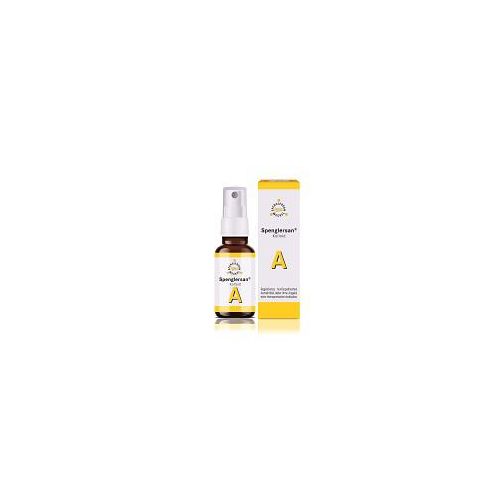
SPENGLERSAN Kolloid A 50 ml
Anbieter: Mediherz-shop.de Preis: 27,43 €Spenglersan Kolloid A Zusammensetzung: 10ml Mischung enthalten: Arzneilich wirksame Bestandteile: Antigene und Antitoxine aus Mycobacterium bovinus Dil. D9. Sonstige Bestandteile: Thymol, Salzsäure 25% (m/V) Anwendungsgebiete: Spenglersan Kolloid A ist ein registriertes homöopathisches Arzneimittel und deshalb ohne Angabe einer therapeutischen Indikation im Handel. Dosierung: Bei akuten Zuständen alle halbe bis ganze Stunde, höchstens 6-mal täglich, je 5 Sprühstöße in die Ellenbeuge einreiben. Bei chronischen Verlaufsformen 1-3-mal täglich je 5 Sprühstöße in die Ellenbeuge einreiben.
-
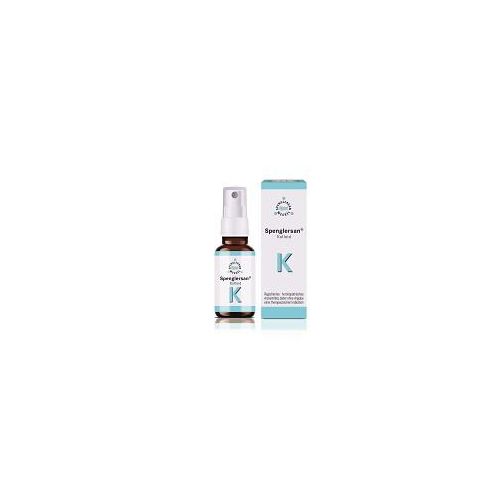
SPENGLERSAN Kolloid K 20 ml
Anbieter: Mediherz-shop.de Preis: 11,79 € (+3,90 €)Spenglersan Kolloid K Zusammensetzung: 10ml Mischung enthalten: Arzneilich wirksame Bestandteile: Antigene und Antitoxine aus Staphylococcus aureus subsp. Aureus Dil.D9. Streptococcus pneumoniae subsp. Pneumoniae Dil.D9 . Sonstige Bestandteile: Thymol, Salzsäure 25 % (m/V), Zuckersirup, gereinigtes Wasser Anwendungsgebiete: Spenglersan Kolloid K ist ein registriertes homöopathisches Arzneimittel und deshalb ohne Angabe einer therapeutischen Indikation im Handel. Dosierungsanleitung, Art und Dauer der Anwendung: Erwachsene und Kinder ab dem 12. Lebensjahr: bei akuten Zuständen alle halbe bis ganze Stunde, höchstens 6-mal täglich, je 5 Sprühstöße in die Ellenbeuge einreiben. Bei chronischen Verlaufsformen 1-3-mal täglich je 5 Sprühstöße in die Ellenbeuge einreiben.
-
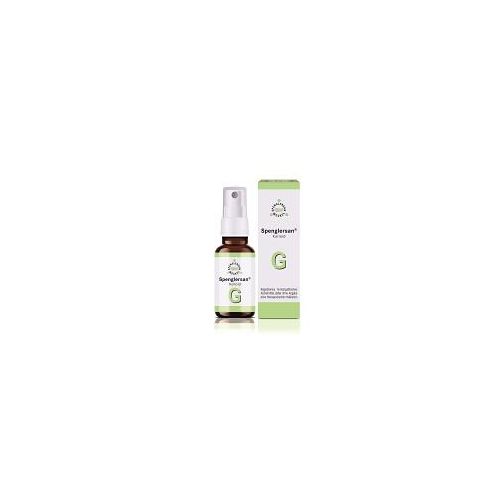
SPENGLERSAN Kolloid G 20 ml
Anbieter: Mediherz-shop.de Preis: 11,79 € (+3,90 €)Spenglersan Kolloid G Enthält in 10 g: Die Wirkstoffe: Antigene aus Influenza A Virus Spengler ad usum externum Dil. D9 (HAB, Vorschrift 58a), 1,67 g, Antitoxine aus Influenza A Virus Spengler ad usum externum Dil. D9 (HAB, Vorschrift 58b) 1,67 g, Antigene aus Haemophilus influenzae Spengler ad usum externum Dil. D9 (HAB, Vorschrift 58a) 1,67 g, Antitoxine aus Haemophilus influenzuae Spengler ad usum externum Dil. D9 (HAB, Vorschrift 58b) 1,67 g, Antigene aus Klebsiella pneumoniae subsp. Pneumoniae Spengler ad usum externum Dil. D9 (HAB, Vorschrift 58a), 1,67 g, Antitoxine aus Klebsiella pneumoniae subsp. Pneumoniae Spengler ad usum externum Dil. D9 (HAB, Vorschrift 58b) 1,67 g, gemeinsam verdünnt über 8 Stufen Weitere Bestandteile: Thymol, Salzsäure 25 % (m/V) Mischung zur Anwendung auf der Haut Spenglersan Kolloid G ist ein registriertes Arzneimittel nach §38 Arzneimittelgesetz und daher ohne Angabe einer therapeutischen Indikation Dosierungsanleitung: Erwachsene und Kinder ab dem 12. Lebensjahr: bei akuten Zuständen alle halbe bis ganze Stunde, höchstens 6-mal täglich, je 5 Sprühstöße in die Ellenbeuge einreiben. Bei chronischen Verlaufsformen 1-3-mal täglich je 5 Sprühstöße in die Ellenbeuge einreiben. Säuglinge bis zum 1. Lebensjahr erhalten nach Rücksprache mit einem naturheilkundlich arbeitenden Therapeuten oder Arzt nicht mehr als ein Drittel der Erwachsenendosis. Kleinkinder bis zum 6. Lebensjahr erhalten nicht mehr als die Hälfte, Kinder zwischen dem 6. und 12. Lebensjahr erhalten nicht mehr als zwei Drittel der Erwachsenendosis.
-
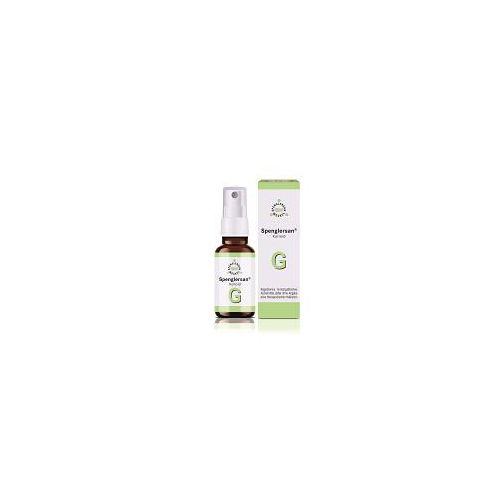
SPENGLERSAN Kolloid G 50 ml
Anbieter: Mediherz-shop.de Preis: 30,17 €Spenglersan Kolloid G Enthält in 10 g: Die Wirkstoffe: Antigene aus Influenza A Virus Spengler ad usum externum Dil. D9 (HAB, Vorschrift 58a), 1,67 g, Antitoxine aus Influenza A Virus Spengler ad usum externum Dil. D9 (HAB, Vorschrift 58b) 1,67 g, Antigene aus Haemophilus influenzae Spengler ad usum externum Dil. D9 (HAB, Vorschrift 58a) 1,67 g, Antitoxine aus Haemophilus influenzuae Spengler ad usum externum Dil. D9 (HAB, Vorschrift 58b) 1,67 g, Antigene aus Klebsiella pneumoniae subsp. Pneumoniae Spengler ad usum externum Dil. D9 (HAB, Vorschrift 58a), 1,67 g, Antitoxine aus Klebsiella pneumoniae subsp. Pneumoniae Spengler ad usum externum Dil. D9 (HAB, Vorschrift 58b) 1,67 g, gemeinsam verdünnt über 8 Stufen Weitere Bestandteile: Thymol, Salzsäure 25 % (m/V) Mischung zur Anwendung auf der Haut Spenglersan Kolloid G ist ein registriertes Arzneimittel nach §38 Arzneimittelgesetz und daher ohne Angabe einer therapeutischen Indikation Dosierungsanleitung: Erwachsene und Kinder ab dem 12. Lebensjahr: bei akuten Zuständen alle halbe bis ganze Stunde, höchstens 6-mal täglich, je 5 Sprühstöße in die Ellenbeuge einreiben. Bei chronischen Verlaufsformen 1-3-mal täglich je 5 Sprühstöße in die Ellenbeuge einreiben. Säuglinge bis zum 1. Lebensjahr erhalten nach Rücksprache mit einem naturheilkundlich arbeitenden Therapeuten oder Arzt nicht mehr als ein Drittel der Erwachsenendosis. Kleinkinder bis zum 6. Lebensjahr erhalten nicht mehr als die Hälfte, Kinder zwischen dem 6. und 12. Lebensjahr erhalten nicht mehr als zwei Drittel der Erwachsenendosis.
40 Ergebnisse in 0.38 Sekunden
Ähnliche Suchbegriffe
© Copyright 2026 shopping.eu